
The Parenting Process: A Day-Long Workshop with Eileen Paris, Ph.D.

Instructor
Dr. Eileen Paris, Ph.D.
Date and Time
1-day Seminar
Saturday, May 16, 2026
9:00am – 4:00pm PT
Hybrid Course
offered in person and online!
In-Person at
The Alamo Psychotherapy and Training
6401 Ruby Street, Los Angeles, CA, 90042
Online: Link shared with registrants 24-hours before Workshop
CEs
6 CEs for qualifying professionals
Fees
Early Bird Rate EXTENDED TO May 4
$275 licensed / $200 prelicensed & students
Late Registration, May 5 - 15
$300 licensed / $225 prelicensed & students
We parent from somewhere. And until we know where, our children often carry what we haven't yet faced.
This is a familiar idea in theory and a surprisingly difficult one to work with in practice. Parent work is where many of us feel least sure of ourselves: uncertain how to engage what a parent brings without either managing it or getting lost in it, unsure how to be useful without becoming directive, and quietly aware that what the parent stirs in us is itself clinical information we don't always know how to use. Many of us were trained to work with the child. The parent, their history, their blind spots, and their grief is often where our confidence runs out.
This workshop is for those clinicians.
Course Description
Join psychoanalyst and educator Eileen Paris, Ph.D. for a full-day experiential workshop exploring the relational foundations of parenting and what gets in the way. Drawing on contemporary psychoanalytic theory, somatic awareness, and decades of clinical experience, Dr. Paris guides clinicians through the dynamics that most profoundly organize the parent-child relationship: intergenerational transmission, projective identification, somatic enactment, and the unconscious ways a parent's own developmental history shapes what they perceive in their child...and what they cannot yet see.
At the heart of this work is a problem clinicians encounter constantly but don't always have language for: a parent who cannot quite see their child. Not because they don't love them, but because their own history is in the way; filtering their child's behavior through the lens of their own unresolved experience, and making it genuinely difficult to distinguish what the child needs from what the parent fears, expects, or cannot bear. Learning to recognize this dynamic and to open a genuine reflective dialogue with parents about it is among the most transformative skills a child clinician can develop.
Central to the day is The Parenting Process, a clinically-grounded framework organized around three developmental themes:
Bonding: the lifelong architecture of safety and trust and what disrupts it
Mirroring: helping children feel seen, heard, and emotionally held and what interferes
Differentiation: honoring each child as a distinct person and why this is harder than it sounds
Through didactic teaching, experiential exercises, group reflection, and journaling, clinicians will develop both theoretical grounding and a felt, embodied understanding of these dynamics. Knowing them conceptually is not the same as being able to recognize them when they are live in the room. Equally important is what becomes possible when those patterns are named and the reflective shift that changes how a parent sees, and therefore how they respond.
After this workshop, clinicians will sit with parents differently. Rather than reaching for guidance or psychoeducation, they will have the confidence to slow down, to follow a parent's affect, to stay curious about what history might be organizing the moment, to open a dialogue about what the parent perceives in their child and where their own story might be quietly shaping that perception. They will be less likely to work around the parent and more able to work with them; recognizing that the parent's own capacity for presence is not a backdrop to the child's treatment but its most vital ingredient.
Lunch and refreshments included.
Learning Objectives
After this workshop, attendees will be able to:
Engage parents with genuine curiosity and confidence, moving away from psychoeducation toward a relational stance that treats the parent as a therapeutic subject.
Recognize when a parent's unresolved history is organizing the present moment and use that recognition as a clinical entry point.
Open a reflective dialogue with parents about how their own history shapes what they perceive in their child.
Tolerate the affective complexity parents bring, including ambivalence, defensiveness, and grief, without prematurely resolving it.
Support parents through rupture and repair as a lived relational experience that models what they are trying to offer their children.
Use their own somatic and affective responses as instruments of attunement rather than sources of interference.
Schedule
(Rough schedule, times subject to change)
9:00-10:30am Emotional Legacies: Identifying our “tender spots”
10:30-10:40 Coffee Break
10:40am-12:10pm Emotional Dysregulation (Fragmentation) & Grounding: Losing Our Emotional Balance and Getting it Back
12:10-12:45 Lunch
12:45-2:15 Understanding Children’s Emotional Development & Bonding: Working with Attachment and Mirroring: Accurate Emotional Reflections
2:15-2:25 Coffee Break
2:25-3:40 Differentiation: Working With Boundaries
3:40-4:00 Putting it all Together: A Blueprint for Interrupting Intergenerational Trauma
Instructor Credentials
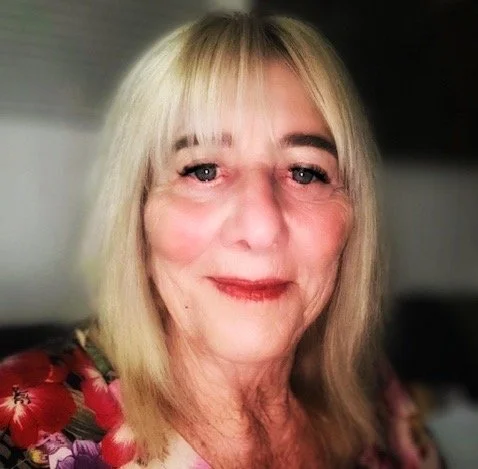
Eileen Paris, Ph.D, is a Training and Supervising Analyst at the Institute of Contemporary Psychoanalysis and has been working with children and families for 55 years. She began her career as a pre-school teacher, became a somatic therapist, then a psychoanalyst. Eileen has served on the faculty of the Reiss-Davis Child Study Center, the Infant Mental Health Specialist Training Program at Cedars/Sinai, and the Santa Barbara Graduate Institute. She developed a psychoanalytically informed model of parent education called the Parenting Process and co-authored, “I’LL NEVER DO TO MY KIDS WHAT MY PARENTS DID TO ME!” A Guide to Conscious Parenting, (Warner Books, 1994). Dr. Paris is in private practice in Santa Cruz, California and offers workshops and trainings in the US, Canada, and Europe. Learn more at https://www.eileenparis.com/
For more information or questions contact us at thealamoprograms@gmail.com
Refund policy: Participants seeking a refund can email us at thealamoprograms@gmail.com at least 15 days before the first meeting. Refunds requested 15 days or earlier will receive 100% refund. 14-7 days prior, participants are eligible for a 50% refund. No refund will be provided 6 days prior or less.
Course attendance certificates awarded within 21 days of end of course.
Course meets the qualifications for 6 hours of continuing education credit for PhD, LMFTs, LCSWs, LPCCs, and/or LEPs as required by the American Psychological Association and the California Board of Behavioral Sciences.
The Alamo Psychotherapy and Training is a dba of Michelle Harwell Therapy. Michelle Harwell Therapy is approved by the American Psychological Association to sponsor continuing education for psychologists. Michelle Harwell Therapy maintains responsibility for this program and its content.
No known conflict of interest or commercial support for Michelle Harwell Therapy, The Alamo Psychotherapy and Training, or the instructor.
Contact Us
To request accommodations for special needs, obtain the grievance policy, report a grievance, request a refund, request more information about the course, or if you have general questions, please email us at thealamoprograms@gmail.com